Hope for Two

Hope for Two was the first organization I found while scouring the internet for people like me. They helped to ease my fears, made me realize that I was not alone, and have provided great support to me and many others. Here is their story.

What is your program all about and how did you find yourself involved?

Hope for Two was founded in the Fall of 1997 by three women who met and bonded over a shared experience – all three were diagnosed and treated for cancer while pregnant.

On December 1st, 1995, halfway through the pregnancy with her third child, Patty Murray, a founder and the current Board Chairwoman, was diagnosed with advanced stage Breast Cancer. Her excitement and anticipation were crushed. She was suddenly filled with fear and confusion, unsure of the options available to her – whether or not she could continue with the pregnancy or if she would be forced to terminate the pregnancy. She found that when she sought her doctors’ advice, they had very little experience to offer. On blind faith, Patty decided to continue the pregnancy while undergoing major surgery and chemotherapy.

The next year was filled with visits to the doctor for chemotherapy and check-ups: the obstetrician once a week, an ultrasound to check the health of the baby once a week, and the oncologist once or twice a week for chemotherapy. She was the bald pregnant lady at the obstetrician and the young woman with the big belly at the oncologist. She lived those months with the paralyzing fear that she had made a terrible decision – fear that her baby would be born with deformities, fear that her cancer would spread to her bones, and fear that this child, as well as her two older children, would be left without a mother. The treatments were so exhausting that Patty feared she would be unable to keep up her strength for the baby to survive.

The day before her lumpectomy, as she rubbed her small stomach with her baby inside, was spent writing her will instead of setting up the baby’s room. During this time of immense uncertainty and confusion, Patty was introduced to two women who had successfully undergone cancer treatments while pregnant – Mary Rose and Lisa. These women were able to provide the emotional support and understanding that Patty was unable to get anywhere else. These two women understood the dread, consternation and isolation she was experiencing. They helped to relieve the fear about the effects the treatment would have on her child. Their children were born healthy and were developing at a normal rate. At a time of constant uncertainty and apprehension, Mary Rose and Lisa offered a sense of stability and hope.

Patty’s son was born in March of 1996 and they were there for her the whole time. They remained in her life until the baby was born, but once Patty’s treatments ended (she went on to have five more months of chemotherapy after her son Patrick was born and then 5-1/2 weeks of radiation), in November of 1996, the woman fell out of touch and only called each other every few months. During the Summer of 1997, eight months after the completion of her treatments, Patty began to experience debilitating panic attacks. She met with a counselor who diagnosed her with Post-Traumatic Stress Disorder and after four sessions, encouraged her to go out and help others. Unbeknownst to her, during the time the three cancer survivors were out of touch, Mary Rose had written a short paragraph that would be a sidebar to a major article in Redbook Magazine, May 1997, about her experience with pregnancy and cancer. In response to the article, Redbook received 12 letters from women across the country who also battled cancer while pregnant. When the three women finally met face to face in September of 1997, Mary Rose showed them the article and the responses. Patty, Mary Rose, and Lisa recognized that there were women who needed a support network similar to what they had for each other. They felt strongly that they could be that support. Patty spent the next few weeks investigating the possible existence of national or international groups that already filled the need; but upon finding nothing, they decided to incorporate. They paid the filing fees themselves and in October of 1997 the Pregnant with Cancer Support Group Inc. was born! A newsletter was written and the three of them recruited the women who responded to Mary Rose’s article, together becoming the first group of Volunteer Support Women. Their mission has always been dedicated to providing women diagnosed with cancer while pregnant with information, support and hope – all the things that the founding members were seeking when they were first diagnosed.

What populations and areas do you serve?

The guiding principles of the organization are to serve women in all socioeconomic, ethnic and religious backgrounds world-wide; remove barriers to women obtaining complete and accurate information about their options for dealing with cancer while pregnant; and to respect and support every woman’s personal decisions without judgment. We have trained over 445 Volunteer Support Women from all over the world representing 32 countries including Australia, Canada, the United Kingdom, Switzerland, Jordan, Russia, South Africa, India, Malaysia, Venezuela and Singapore. To date, we have counseled over 1200 women. The website has more than 1000 unique visitors each month providing countless others with the information, hope and resources they need.

Of the women receiving support, 70% have been diagnosed with Breast Cancer with 33 types of cancer represented. Women find it important to speak with another woman who has had the same type of cancer and stage; Hope for Two provides that support.

Tell us more!

Our mission has always been dedicated to providing women diagnosed with cancer while pregnant with information, support and hope – all the things that the founding members were seeking when they were first diagnosed. Our vision continues to be to offer resources and peer-to-peer counseling to all pregnant women diagnosed with cancer. From conception until 2004, the organization operated with only a working board, no employees, with the mainstay to the support network made up of volunteers – women who survived cancer while pregnant. Today, 20 years later, Hope for Two now has a Board of Directors consisting of eleven members including a licensed social worker who is a Cancer Counselor and one cancer survivor. Additionally, the organization has enlisted the assistance of a volunteer Advisory Board, including Dr. Elyce Cardonick from Philadelphia who is currently conducting a study on the affects of cancer treatment on babies and the survival rates of the women treated as compared to non-pregnant women. Dr. Cardonick acts as a liaison between newly diagnosed patients, their obstetrician and their oncologist to ensure that all those involved in the case have access to the best information for treatment and scans – the same information Patty desperately needed when she was diagnosed.

Do you have a favorite quote, mantra, phrase, or curse word?

“Everything happens for a reason…including cancer…because without it I would have never been able to have started this organization.” Patty Murray

How can we help?

Hope For Two operates entirely off of donations. The organization has three part-time staff, each working approximately 5-10 hours per week; and Patty Murray currently volunteers as the acting Executive Director. Donations are needed to fund the services that this organization provides to women in need. In addition, we are able to reach a great deal of women each year through word of mouth. If you or someone you know has been diagnosed with cancer while pregnant, we ask that you reach out to Hope For Two. We provide peer-to-peer counseling, as well as medical information and the assurance that countless women have gone through pregnancy and cancer, and then went on to live happy and healthy lives.

How can we contact your program?

Hope For Two is active on both Facebook and Instagram. Please like our page and share our posts, as these platforms have allowed us to reach a much larger number of women. Our website offers a plethora of materials, including medical articles, past testimonials from patients, and the option to get support. You can find our website here at: http://www.hopefortwo.org/ If you have any questions about Hope For Two, you can contact us through Facebook or our email at info@hopefortwo.org
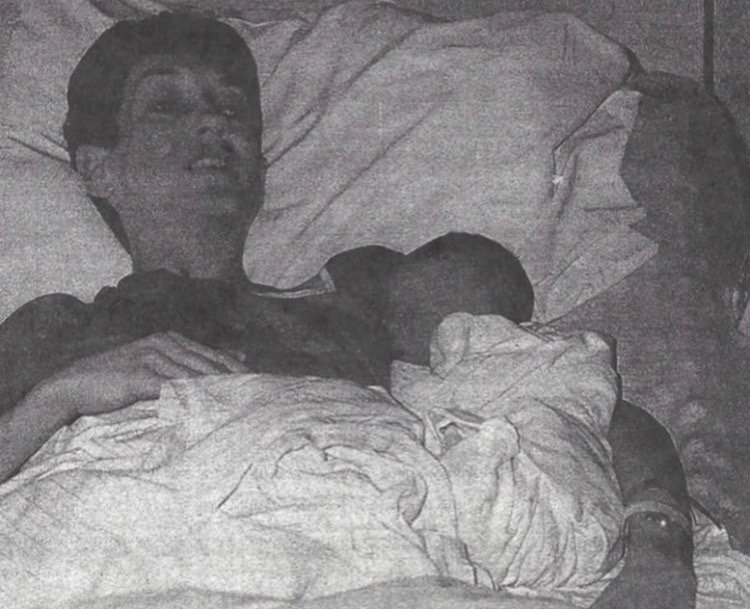
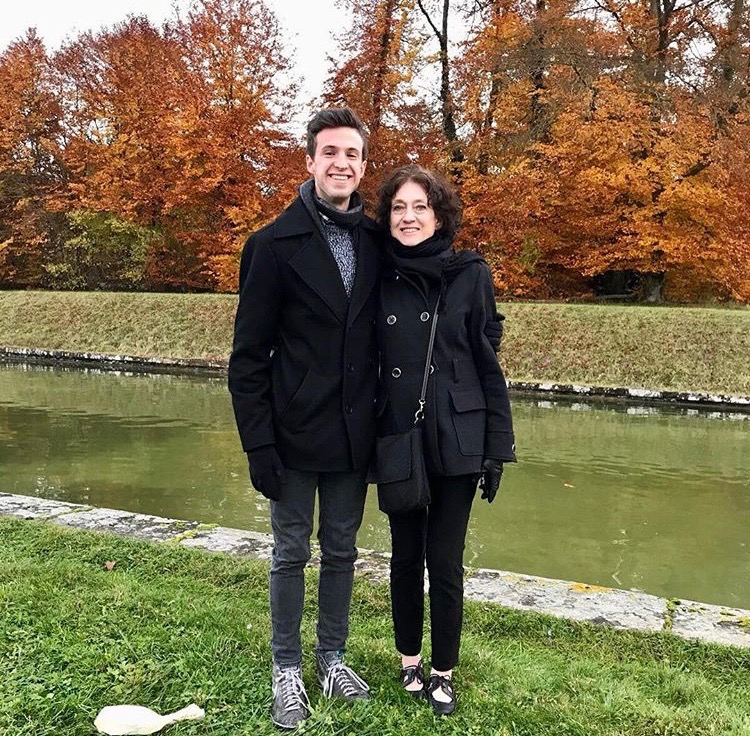
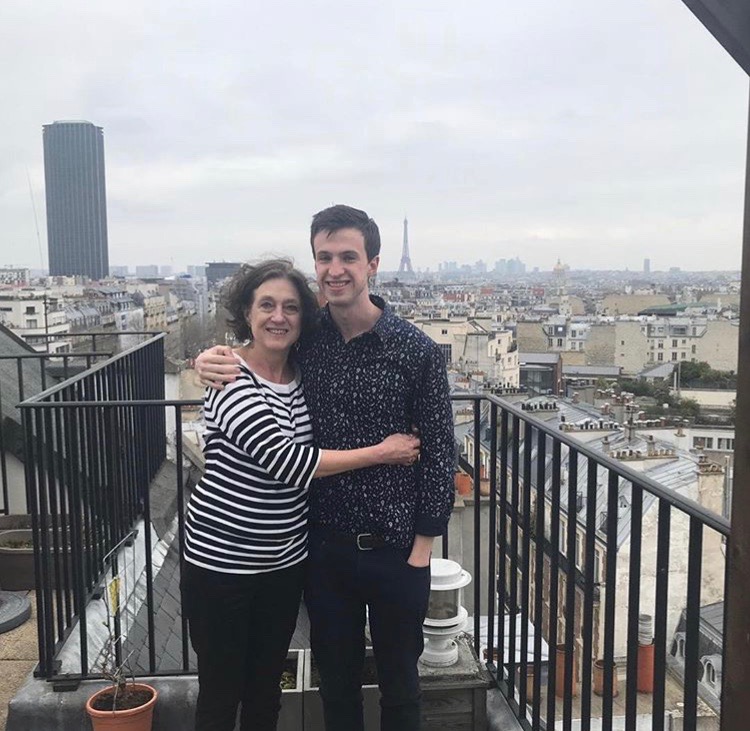
Patty and her Chemo Baby Patrick

A New Project

My work space… if I had a clean table, fingerprint-less laptop, and some fancy filter on my phone. AKA- it’s a stock photo.

Happy Wed-Nes-Day! (Any other adults out there who still have to sound this word out before typing besides me?) 😬

I hope that everyone has been mindful about practicing acts of self care since my last post. Or have at least put it on your radar, now that we’re aware of how important self care really is. Remember, we are all worth it!

So, I recently got a wild hair up my ass and decided that I wanted to start my “October Project” early. Like last year, I was planning to interview people in the C community. But this time around, I wanted to interview the peeps who help to support the C community via programs, organizations, etc. and not necessarily just those diagnosed- though I’ve found that these two things often intersect. I had planned to post one interview per day like last year. But as I thought about it more, I realized that I didn’t want to wait until October. Instead, I will be posting interviews from different foundations, programs, non-profits, businesses, organizations, etc. over the next several months. Hell, if I get enough interest, this could become an on-going deal.

Throughout the interviews, you’ll have a chance to meet the people behind the scenes and see just how dedicated and whole hearted they and the programs they represent sincerely are. My hope is that by showcasing each organization, more people will be able to personally find support or will have the information and can help to spread the word of these amazing people and programs.

The individuals I have been working with and gathering information from are truly special. If you find that you feel the same way and want more information or want to see how you can help, contact information will be provided. And if you know of any person or group that you would like to see included in this project and have a contact for me, let me know! I would love to be able to highlight them! Keep an eye out, I plan to post the first interview next week.

And a little note: You may have noticed that the domain name for this blog has changed from jessicafilloon.com to mamasgotthis.blog … This is in anticipation of another project I’ve been hard at work on. Stay tuned!

Livin’ That Lymph Life

Having gone through my own share of C treatments- chemos, surgeries, and radiation sessions- I feel that I should have been more informed about the oh-so-important Lymphatic System. But the only real info I had was that surgeries (where lymph nodes were removed) and radiation treatments can cause lymphedema- swelling due to the altered flow of lymphatic fluid.  It’s something that never goes away and can have a significantly negative impact on one’s quality of life.

It wasn’t until I attended the Be Well Yoga for Cancer Recovery Teacher Training that I truly started to understand why we ALL should care about this amazing part of our bodies- diagnosis or not.  I’m so impressed by the lymphatic system that I find myself constantly fitting fun facts and ways to improve lymph movement into convos with my yoga students, my friends, family members, strangers… really, anyone who will listen… and now you!

The lymph system is pretty much the body’s sewage system. It’s like a one-way highway- a network of tiny channels that form a passage for lymph fluid to travel throughout the body- with stopping points (lymph nodes) along the way that act like trash cans.  In the lymph nodes, lymphocytes and antibodies hang out to sort through waste, searching for and removing toxic cells, dead cells, bacterias, viruses, and other foreign elements.  The lymph system then irrigates potential threats out of the body via body waste.  If the potentially dangerous cells are not removed from the body, the lymph node enlarges as a sign of infection and the rest of the immune system is notified and comes to kick some ass.

Lymph nodes are located in places like the mouth, nasal passages, neck, arm pits, and groin areas. But the largest and main lymph node is the thoracic duct.  It’s located behind the heart and lungs along the spinal column and runs from the top of the lumbar spine to the base of the neck.

So, why did I just completely nerd out on the lymphatic system?  Because all of that info was totally fascinating, right? Mind blown (poof!) And because, as important as it is to our health and immunity, this system does not have a “pump” to keep this crazy-necessary fluid moving. Instead, the lymphatic system relies on muscles, movement, and gravity to get lymph fluid moving.  Nuts, right? So it’s up to us!

Now you’re thinking “But how? How can I get this super important stuff moving?”  Oh, man. I’m glad you asked!

Breath

Simply by breathing we stimulate the flow of the lymph, and through full, deep breaths we can encourage the flow to be both cleansing and powerful. Full breaths create muscular movement and massage the thoracic duct.

Diaphragmatic (deep) breathing:

Begin by breathing in slowly through your nose, pushing the stomach out. The chest should remain relatively still on the inhale.  Slowly let your breath release out through your mouth. Full and slow diaphragmatic breathing for even just 5-10 rounds will circulate lymph fluid and oxygenate blood.

Before starting any of the exercises below…

Begin with a few rounds of diaphragmatic breathing.  Then bring your ear to your shoulder and on the opposite side, place your palm or flat fingers above the collar bone on the side of the neck.  Gently stretch the skin down while counting like a waltz~ 1-2-3 (about 5-10 times). Repeat on the other side.

Think of it this way, if you don’t open these main drains before getting the lymph moving, it would be like pressing from the bottom of a toothpaste tube with the top on… it will have no where to go. 

Movement & Yoga

The lymphatic system depends largely on muscle activity for its circulation. Though, we tend to spend a lot of time sitting, whether it’s at a desk, in a car, on the couch… and all of this sitting can lead to stagnation.  Fortunately, even minor movement can help.   Remembering to take breaks throughout the day to walk around and stretch can be really beneficial for your lymph system AND your overall wellbeing.

Yoga can help maintain lymph fluid movement via gravity (inversions), utilizing body positioning to reverse pooling of lymph fluid in the lower extremities.  Yoga also increases lymph flow with postures that cause large muscles to contract and relax- encouraging lymph to move through the body.  

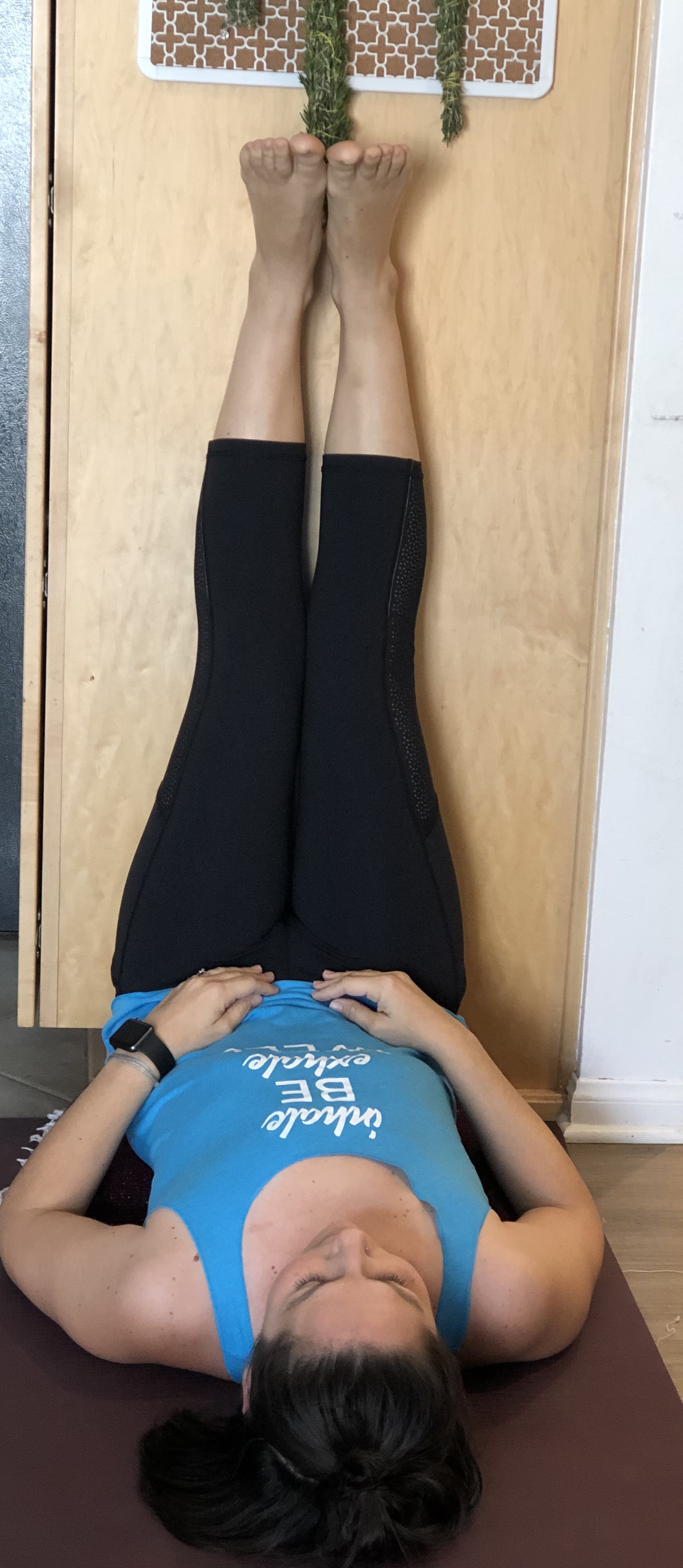
Legs up the… whatever you can find. Just get them up!

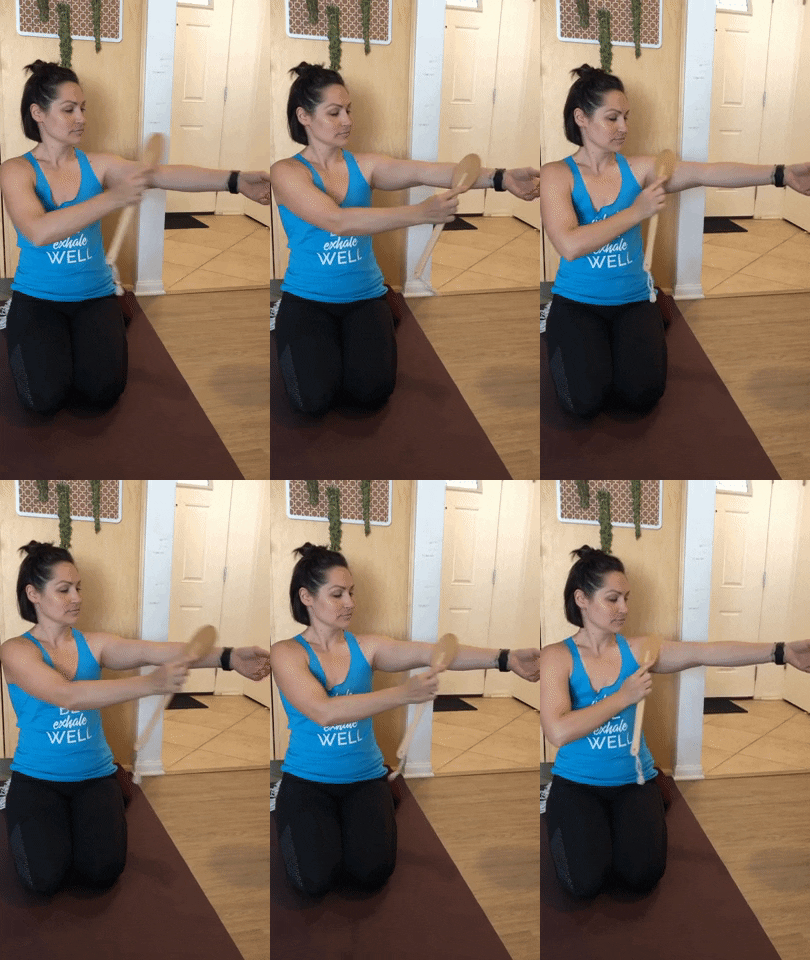
Gentle self-lymphatic massages can be added to various poses to aid the flow of lymph fluid. Try very gently running/dragging the fingers from wrists towards armpits on the top, sides, and bottoms of arms- massaging near the armpits (think- while in Warrior II), as well as very gently dragging fingers from ankles to pelvic area (on all sides of the legs) and massaging around groin / hip creases (think- Staff Pose).

Lymph massage… don’t forget to massage the hip creases!

Dry Brushing

Dry skin brushing also promotes lymphatic drainage and is said to include additional benefits like refreshed skin and reduction of cellulite.  It’s best done few minutes before a shower, using a natural bristle brush.

Stand in your bathtub or shower so all of the falling dead skin doesn’t land on your super sweet bath mat.  Using long sweeping motions, begin brushing at your feet, moving upwards towards your heart.  All brush motions should go towards the heart area. No need to press hard because the lymph system is close to the surface of the skin.  After you have brushed your whole body, hop in the shower.

Dry brushing is best done naked… but this ain’t that kinda site

Fun Facts:

  • About 4 liters of lymph fluid is moved through the body and eliminated each day!
  • The body has between 501 and 700 lymph nodes- varying from person to person.
  • Where there are veins, there are lymphatic vessels.  The cardiovascular system and lymphatic system run parallel to each other .
  • The thymus is a super important part of the lymphatic system.  It is where the T-cells are generated which help to destroy the naughty cells that get flushed out.
  • The thymus is located behind the sternum, between the lungs and can be stimulated by tapping or softly thumping in that area 20-30 times.

Sooooo…. Have I peaked your interest in the lymph system?  Are you as fascinated as I am?

Are you ready to live that Lymph Life?

The contents of this website are for informational purposes only and are not intended to be a substitute for professional medical advice, diagnosis or treatment. Always seek the advice of your physician or other qualified health provider with any questions you may have regarding a medical condition.